
Traditional Chinese Medicine elemental theory offers a unique lens through which we can begin to understand ourselves and our animals. It connects patterns of temperament, emotion, season, movement, and physical health. Ancient Chinese philosophers mapped the natural rhythms and applied them to the body, believing the body mirrors the universe.
Everyone carries aspects of all five elements (Wood, Fire, Earth, Metal, Water), but most express one or two dominant elements that shape how they interact with their environment, express emotion, and naturally hold balance or tension. Looking at ourselves or our animals through this lens can help us understand behavior, health patterns, and natural gifts. When we work with the elements, we’re not just balancing the body, we’re honoring the horse’s whole being.
How the Elements Work Together
The Creation Cycle describes how each element nourishes the next:
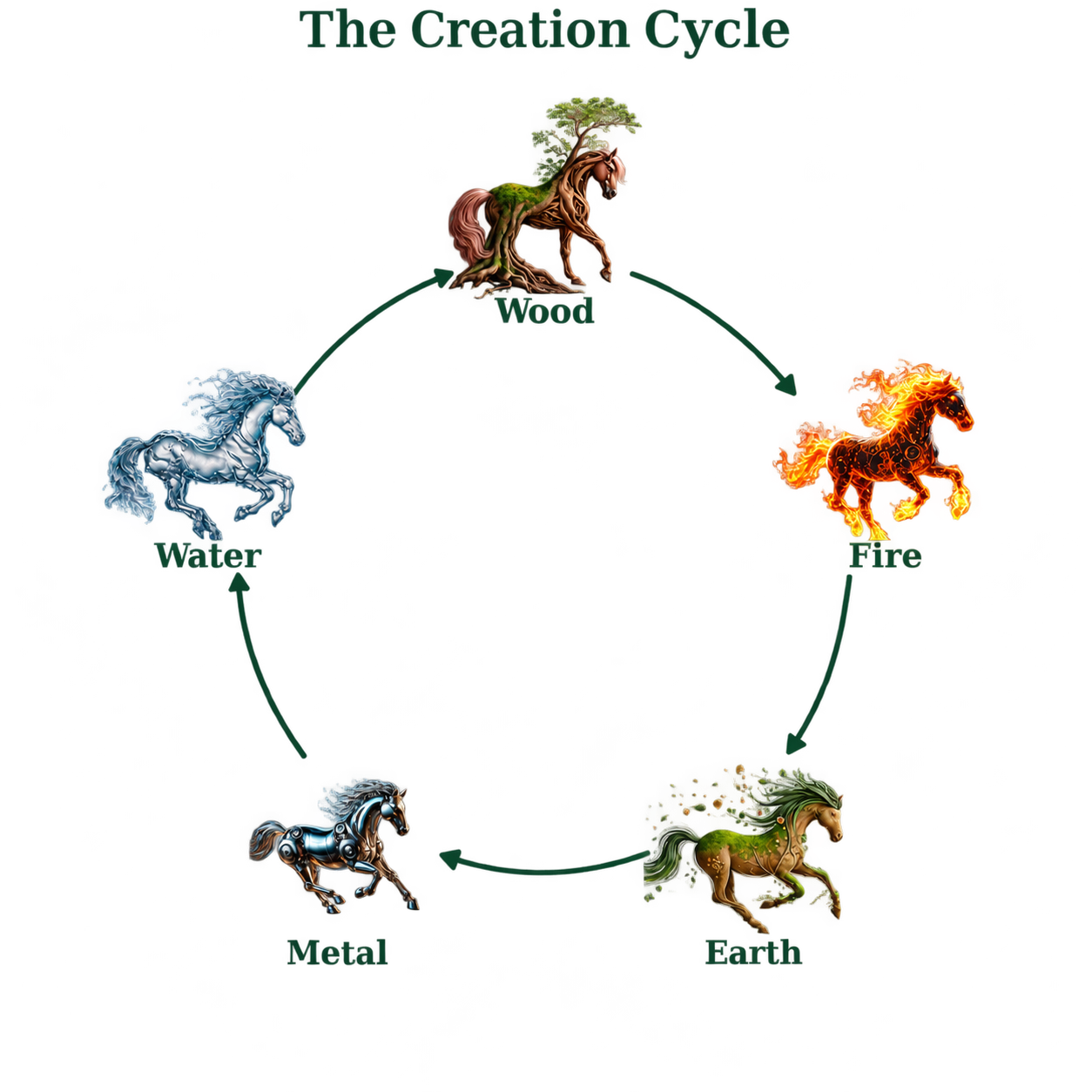
Water supports Wood
Wood feeds Fire
Fire creates Earth
Earth gives rise to Metal
Metal gathers Water.
The Control Cycle provides a balancing influence:
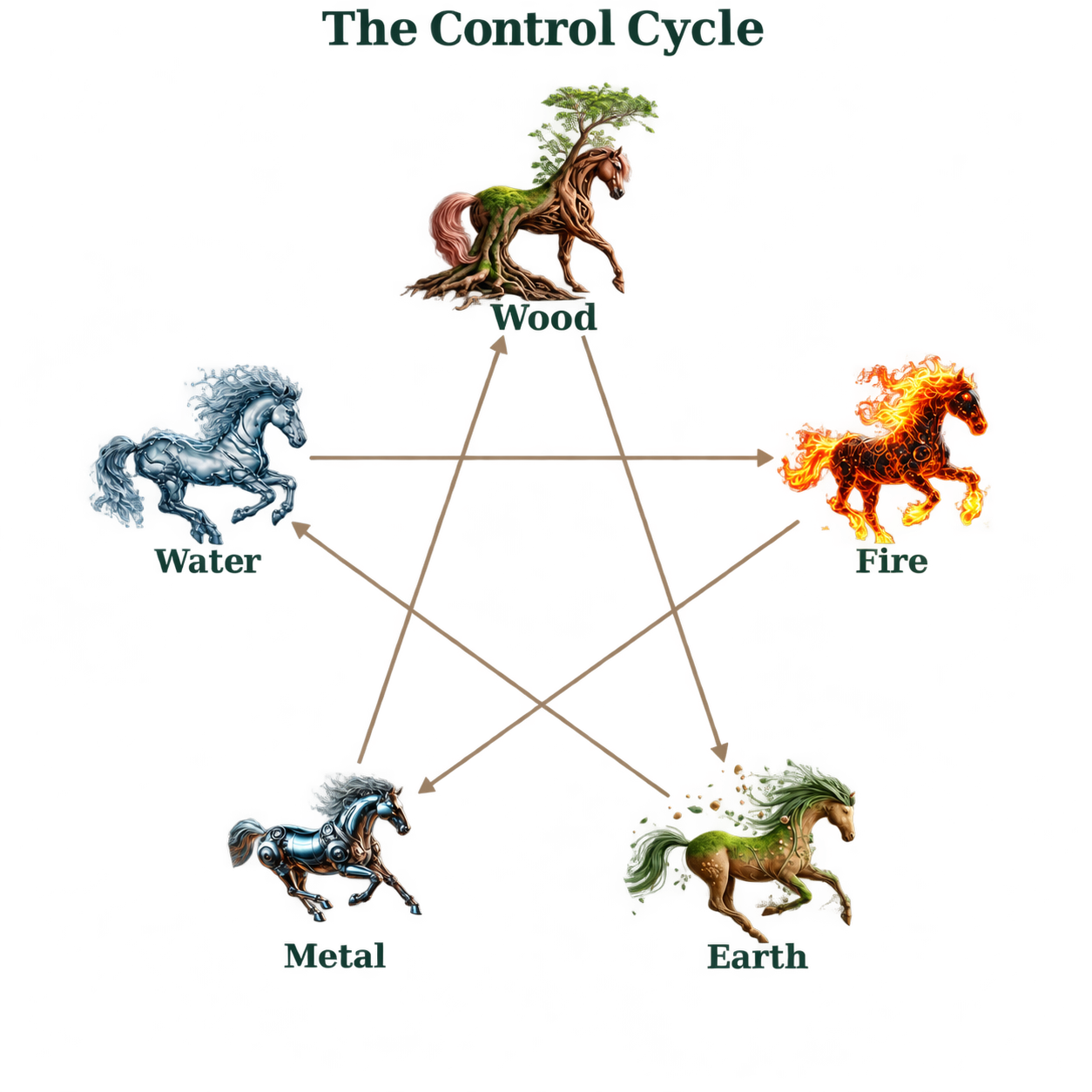
Wood regulates Earth
Earth regulates Water
Water regulates Fire
Fire regulates Metal
Metal regulates Wood.
I like to view the Creation Cycle as the support each element receives and the Control Cycle as the boundaries that help maintain balance. A river needs water to keep flowing, but it also needs banks to guide its path. Within this traditional framework, we’re considering whether each element is receiving enough nourishment and whether its regulating relationships are working well. Too much or too little can affect the relationships throughout the cycle.
For example, consider a Fire horse who becomes easily stressed and has developed gastric ulcers. Within the Five Element framework, frustration and tension might draw our attention to Wood adding fuel to Fire, while fear and insecurity might lead us to explore Water’s role in keeping Fire in check. We would also consider Earth, which Fire nourishes, and its association with the Spleen and Stomach when digestive comfort and nourishment are disrupted. Metal belongs in the picture too, as the element Fire regulates, bringing its traditional connections with the Lung and Large Intestine into our observations. These associations guide what we explore; they don’t establish what caused the ulcers.
Looking at these relationships helps me decide where to begin supporting the horse. For this Fire horse, I would consider whether restricted movement, fear around separation, or an overstimulating routine is making it harder for them to settle. That might lead us to adjust turnout, companionship, or how we approach training, alongside appropriate feeding and veterinary ulcer care. When I’m supporting a horse through bodywork or selecting herbs, I keep these relationships in mind.
The Water Horse
The Master Teacher
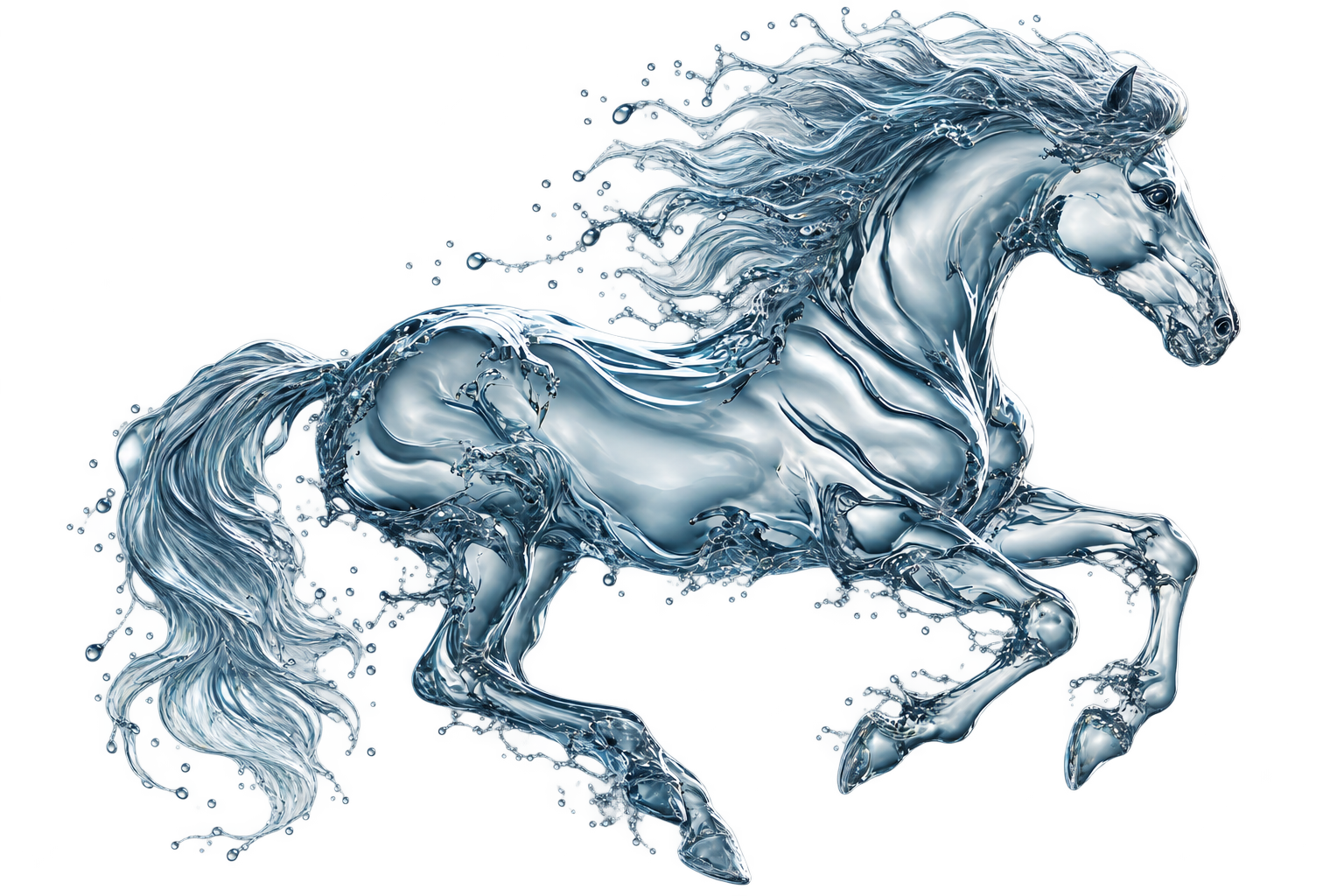
Organ Systems: Kidney & BladderAssociated Tissues & Systems: Bones, marrow, teeth & skeletal systemSensory Organ: Ears/HearingSeason: WinterEmotional Patterns: Fear, courage & willpowerTaste: Salty
Sharing your life with a Water Horse can change the way you understand horses… and sometimes the way you understand yourself. Water horses seem to feel everything and are deeply sensitive, intuitive, and observant. They notice changes in their surroundings, shifts in our own energy, and subtle differences in the herd. They are often quiet observers who need time before they trust. Just like the quieter pace of their season, winter, they invite us to slow down, turn inward, and pay closer attention. The relationship may challenge familiar ideas about training or care, while opening the door to a connection we hadn’t anticipated.
Physical & Emotional Patterns
Water is associated with the Kidney and Bladder systems, the season of winter, the body’s reserves, and the emotion of fear. These horses may show unique or shifting health concerns and sensitivities, including neurological issues, joint pain, kidney and bladder concerns, stiffness, and cold sensitivity. They can also seem to take on characteristics of other elements. Water is associated with aging, making it an important element to consider as our animals grow older.
In TCM, the Kidney system is the storehouse of Jing, the body’s deep reserves, which are finite and deplete over time. It governs growth, vitality, and the regulation of fluid flow throughout the body, while the Bladder system stores and eliminates fluid waste. Imbalance may draw our attention to fear, lumbar discomfort, skeletal concerns, and disruptions in the body’s fluid systems.
Fear is the core emotion of the Water Element. When in balance, they exhibit courage and willpower but when out of balance they may become overly fearful or show a lack of fear entirely. If their human partners carry fear or worry, it can impact their wellbeing if they mirror this emotion.
Nutrition & Herbs
Water horses thrive on deep nourishment. Ensuring they are getting enough minerals through hay testing and mineral balancing is important for their skeletal system and overall vitality.
Mineral-rich foods such as spirulina or seaweeds and Nettle to support overall well-being.
Offering herbs to support kidneys like dandelion, cleaver, or black sesame seeds.
For horses prone to cold, warming herbs like ginger, Ceylon cinnamon, and astragalus.
Water horses may carry underlying tension or fear-based stress. Nervine herbs such as oat straw, skullcap, and lemon balm are traditionally used to support a calmer nervous system.
Flower remedies like Rescue Remedy or walnut can be added for emotional support during times of change or uncertainty.
Training, Lifestyle & Balance
When working with Water horses, consistency, quiet observation, and choice are especially valuable. A Water horse may respond beautifully to patient groundwork, gentle bodywork, and a guardian who notices the moment the horse begins to relax. I would rather build trust in small moments than push through fear to reach a training goal.
Water Horses thrive on predictable routines, a calm environment, and a deep sense of security with their caretakers. For those sensitive to cold, dampness, or extreme weather, shelter, blanketing, and attention to hydration can help support them.
When stressed, Water Horses may show more intense behavioral responses, physical changes that need further investigation, or repetitive behaviors such as weaving or cribbing. Changes in their environment may also affect them, along with sensitivities to pesticides, chemical shampoos or fly sprays, and environmental allergies.
Movement belongs in their daily routine to help keep their energy and water flowing. While they can excel in performance, their comfort, rest, and sense of safety need attention too.
Sharing your life with a sensitive Water Horse may challenge you to rethink familiar ideas about training and equine health. These horses may respond well to approaches such as acupressure, acupuncture, craniosacral, energy work, and in-hand or liberty work. Positive reinforcement, when thoughtfully introduced, can also help build trust and confidence.
Training a Water Horse is about partnership, listening, adapting, and discovering what supports their wellbeing. Let go of rigid goals, whether it’s competition or even riding at all, and stay open to what your horse is showing you along the way.
The Wood Horse
The Trailblazer
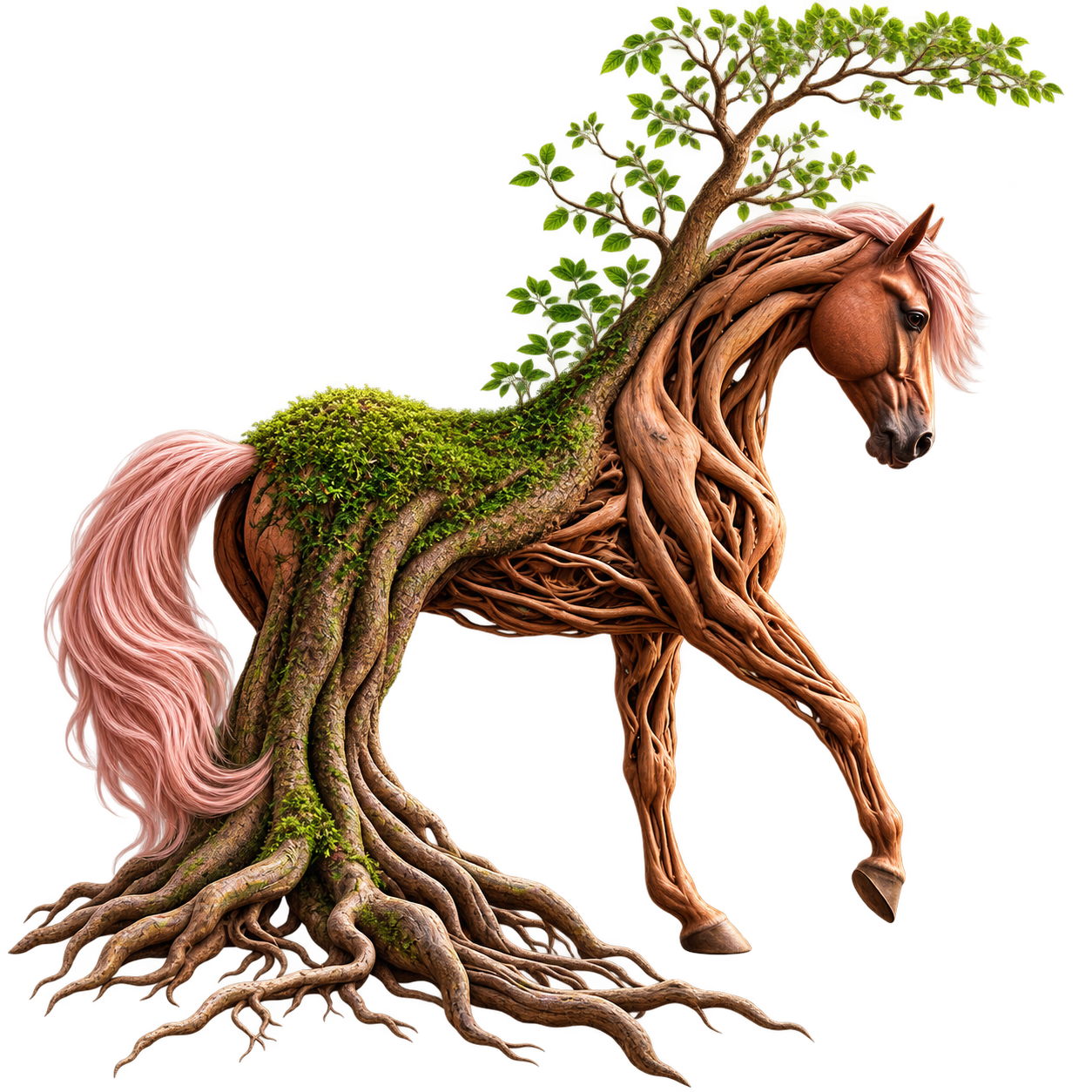
Organ Systems: Liver & GallbladderAssociated Tissues & Systems: Tendons, ligaments & hoovesSensory Organ: EyesSeason: SpringEmotional Patterns: Confidence & angerTaste: Sour
Wood horses are the Trailblazers. Full of energy and purpose, they step into your life to get things moving. They don’t wait for things to happen, they push you into action. Like a tree growing towards the sun or roots moving into the earth, they show you that growth comes through steady, forward movement. They teach you that courage isn’t about being fearless but about growing and moving forward even when the path ahead isn’t clear.
They need clarity, direction, and strong leadership. If you’re stuck or indecisive, they will reflect this back to you with attitude, frustration, or sometimes by pulling back. They want someone to act with confidence, be clear and decisive, and lead with loving and fair boundaries. If your direction’s off or you’re not following through, they’ll nudge you forward, reminding you it’s time to grow.
Wood horses show up when it’s time to step into your own power, align your passion with your purpose, and turn your vision into action. They don’t just walk beside you, they push you to step into your fullest self and shape your life with bold intention, leadership, and love.
Physical & Emotional Patterns
Wood horses are purpose-driven, competitive, and natural leaders. They are often at the top of the herd hierarchy and have strong musculature, stamina, and athleticism.
Liver and Gallbladder systems are associated with the Wood Element. The Liver supports the smooth flow of Qi, stores Blood, and nourishes the tendons and ligaments. When looking at a Wood pattern, I pay attention to flexibility, muscle tension, and tendon or ligament concerns. Disrupted Liver Qi is also traditionally associated with digestive upset and reproductive concerns, such as discomfort and irritability around a mare’s heat cycle.
The Liver is traditionally said to open into the eyes, so eye concerns may also draw our attention to Wood. Although horses don’t have a physical gallbladder, the Gallbladder meridian is still part of the framework. I often look at where the meridian runs through the body and whether areas of discomfort follow that pathway.
When the Wood Element is balanced, these horses are confident, decisive, and focused. When out of balance, they may become irritable, quick to react, or easily frustrated. This can show up as more dominant behavior and little patience with herd mates, or as pawing, pushiness, or pulling back during training.
Nutrition & Herbs
All horses, but especially Wood horses, thrive on movement, so combining a balanced diet with regular exercise and turnout is important for their health and wellbeing. Within TCM, inactivity can contribute to stagnation of Liver Qi. A simple, forage-based diet is a good starting point, with attention to the individual horse’s digestion and nutritional needs.
If support is needed, some helpful herbs and foods to consider are:
Herbs such as milk thistle, dandelion, schisandra berry, and burdock are traditionally used to support liver health.
A balanced mineral intake is important for maintaining strong muscles, tendons, and overall vitality. Foods such as alfalfa, chia seeds, and nettles or seaweeds can be added for overall wellness and mineral-rich feeds.
The Wood Element is associated with the sour taste, while bitter flavors also have a place in traditional approaches to Qi movement and digestion. Adding herbs like rose hips, hawthorn berries, and dandelion or apple cider vinegar. I like offering apple cider vinegar as a choice in a separate bucket of water, alongside plain fresh water.
Supporting the GI system is important for Wood horses as digestion and liver function are closely connected.
To support healthy connective tissue, glycine, rose hips, sesame seeds, or gotu kola may be considered according to the horse’s individual needs.
Training, Lifestyle & Balance
Training a Wood horse requires clarity, confidence, and purpose. They are often quick learners who enjoy challenges but can become frustrated when the work feels repetitive or they don’t understand what we’re asking.
Try balancing ridden work with obstacle play, in-hand work, and liberty, mixing more active exercises with slower movements that encourage attention and body awareness. Giving them opportunities to think, move, and problem-solve can keep the work interesting for both of you.
Some may settle more easily after an opportunity for comfortable, free movement through turnout or suitable groundwork. You may also find that keeping pre-ride grooming short and saving longer grooming or bodywork for afterward helps them feel more receptive. Watch the individual horse rather than expecting every Wood horse to prefer the same routine.
These horses need movement, companionship, and play outside of training too. Without enough opportunity to move or engage with their surroundings, these horses may become impatient or irritable. Turnout, trail walks, and varied activities can give them an outlet without every session needing to become a demanding workout.
For older or retired Wood horses, gentle activity, even something as simple as hand walking, can help maintain engagement and a sense of purpose. A horse who has enjoyed having a job may still appreciate familiar activities adapted to their comfort and ability.
If an injury requires stall rest, puzzles, suitable feeding enrichment, and quiet interaction can help keep them occupied. Any changes to turnout or exercise need to fit the rehabilitation plan.
Wood horses need clear, fair, and consistent guidance. I like the idea of softness in structure and structure in softness, offering enough direction that the horse understands us while remaining willing to listen and adapt.
The Fire Horse
The Social Butterfly

Organ Systems: Heart & Small Intestine; Pericardium & Triple BurnerAssociated Tissues & Systems: Blood vessels & circulationSensory Organ: TongueSeason: SummerEmotional Patterns: Joy, connection & anxietyTaste: Bitter
Fire horses are often the life of the herd, drawing humans and other horses with their playful energy. Physically, they tend to have a lighter, more refined build and carry themselves with a graceful, expressive presence.
Physical & Emotional Patterns
In Traditional Chinese Medicine, the Fire Element is linked to the Heart and Small Intestine, governing joy, emotional balance, and discernment. When in balance, Fire horses are affectionate, joyful, intuitive, and emotionally resilient. Imbalances often arise from isolation, inconsistent handling, or lack of emotional engagement or play, leading to anxiety, nervous habits like pacing or cribbing, and withdrawal.
Physical imbalances may show up as heat sensitivity, especially in summer. They may show digestive upset, inflammatory conditions, or tension, particularly in the forelimbs and shoulders. These horses can also be prone to navicular syndrome, hoof abscesses, hormonal fluctuations, skin irritations, and challenges with body awareness.
Fire horses flourish in environments with heartfelt connection, consistency, and playful interaction. With steady, loving leadership and social engagement, they blossom into joyful, expressive partners. Without this supportive foundation, they may become overwhelmed, stressed, or emotionally shut down.
Nutrition & Herbs
Supporting the Fire horse focuses on their sensitive digestion, tendency toward internal heat, and emotional balance. In TCM, they are often described as having more Yang energy (outward, expressive, and warm). Neutral to cooling foods and herbs that nourish Yin may help balance that pattern.
Fire horses thrive in a low-stress feeding environment with predictable routines and emotional calm, as tension can contribute to ulcers, gas, or digestive upset. If stalled at night, they often do best next to a calm, non-aggressive horse who helps them feel settled.
Grass hay should form the foundation of their diet. Supplemental alfalfa may be appropriate for some horses and can provide buffering support for stomach acid and is cooling in TCM which can lower internal heat especially if the horse struggles with ulcers.
Bitter foods and herbs are traditionally used to support Fire types and clear excess heat. Herbs like dandelion leaf, artichoke leaf and chicory root (which contains inulin, a prebiotic fiber that feeds beneficial gut microbes).
Cooling and moistening herbs and foods, such as aloe vera inner gel, marshmallow root, slippery elm, and chia seeds, may be considered for digestive comfort.
Magnesium also supports normal nerve and muscle function.
Probiotic yeast such as Saccharomyces boulardii may be considered for digestive support. L-glutamine is an amino acid that may also be considered for support and repair the digestive tract lining.
Other supportive foods within TCM food energetics include black sesame seeds, associated with nourishing the Heart and Yin, and mineral-rich seaweeds when their mineral content fits the overall diet.
Training, Lifestyle & Balance
Training a Fire horse requires a heartfelt approach that blends consistency with encouragement and playfulness. They are emotionally intelligent and thrive on bonding activities that build trust and connection. Beginning a session with mindful breathing, gentle massage, or quiet grooming can help them feel grounded and appreciated. Fire horses are often easy and fun to train because they learn quickly but they need to be grounded and focused and it needs to be FUN! Give them time to review what they’ve learned, balancing playful engagement with moments of calm.
Repetition can feel tedious, so varied exercises help keep the work interesting. Groundwork, liberty, or expressive movement games tap into their social nature and curiosity. Recognize even the smallest successes with praise, and consider blending in positive reinforcement (R+) training. If they begin to rush, carry their head high, become distracted, or lose body awareness, they may be stressed or mentally overloaded.
Fire horses thrive on healthy herd dynamics and deep companionship. They often form strong pair bonds and are the socialites and curious ones within their herd. If their need for social interaction and play with humans or other horses is not met, their Fire energy can become unbalanced. Isolation or a lack of meaningful interaction may leave them anxious, stressed, or withdrawn. Turnout with herd mates offers opportunities for movement, connection, and play, while peaceful walks and unstructured time together can support your relationship outside of training.
Chaotic or busy barns, constant changes, and overstimulating activity can leave them prone to stress and GI upset. Offering a quiet setting with consistent routines and familiar companions can be helpful.
They respond best to guardians who lead with heart and clarity, balancing kindness with clear expectations while making room for companionship and play.
The Earth Horse
The Steady Rock
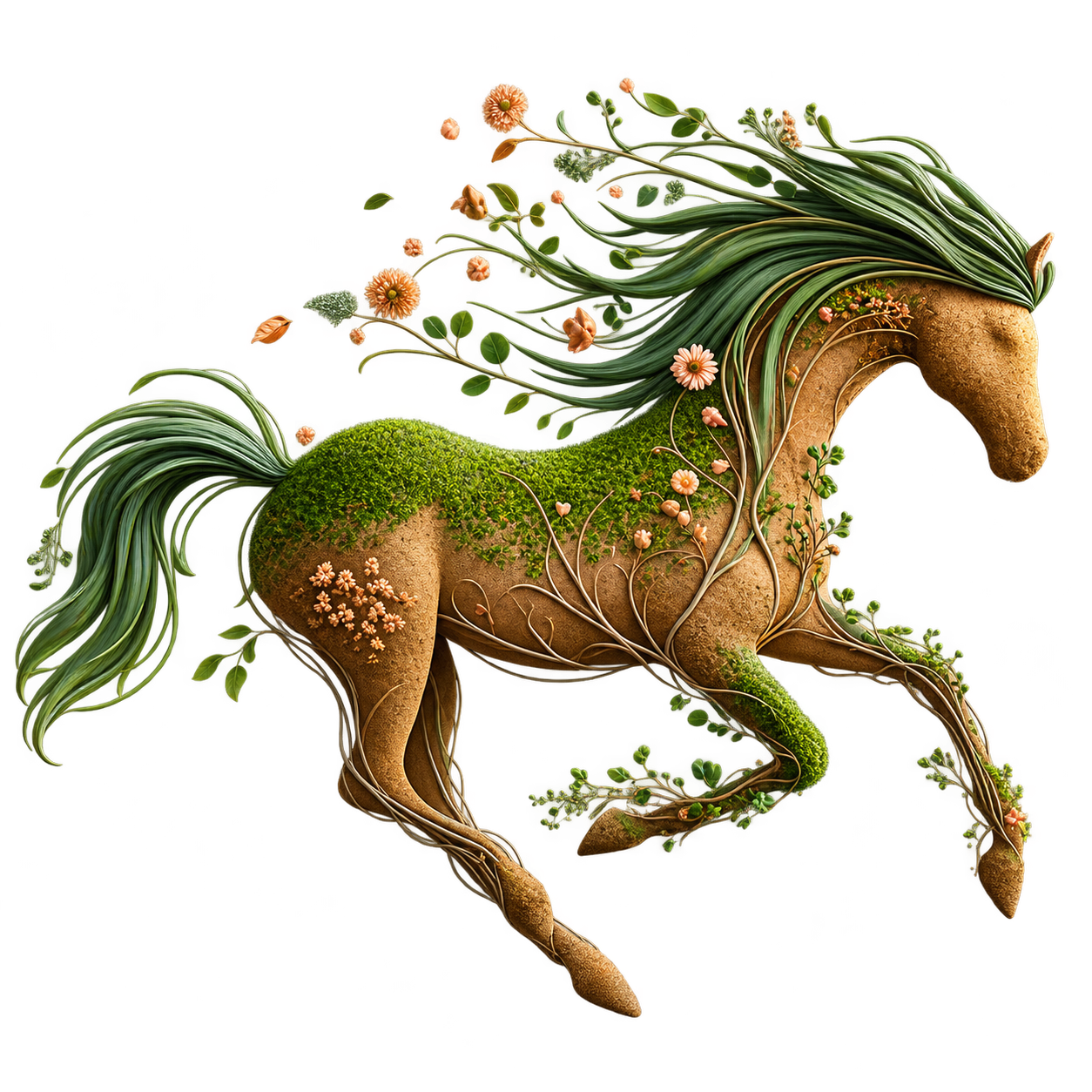
Organ Systems: Spleen & StomachAssociated Tissues & Systems: Muscles, flesh & digestionSensory Organ: MouthSeason: Late SummerEmotional Patterns: Nurturing, worry & overthinkingTaste: Sweet
The Earth Horse is steady and nurturing, reminding us of the importance of grounding, connection, and simple routines. They show that nourishment comes not only from food, but also from our relationships and emotional balance. Just like their season of late summer, a time of harvest, transition, and abundance, Earth Horses invite us to slow down, appreciate what we have, and find contentment in the familiar rhythms of life.
With their quiet presence, Earth Horses encourage us to return to our center and care for ourselves and others with kindness. They remind us that true strength is not always quick or showy; it is the quiet, dependable support that sustains life, like the fertile soil under our feet.
Physical & Emotional Patterns
Earth Horses are known for being steady and reliable in the herd. Their calm nature draws others to them. They are usually solid and well-muscled, moving with a steady, purposeful energy. These horses are great partners for children, beginner riders, and lesson horses.
Earth Element is associated with the Spleen and Stomach. It governs digestion, nourishment, and the movement of nutrients and fluids, while also supporting a sense of being grounded. When balanced, Earth Horses are patient, generous, dependable, and emotionally stable. They thrive on routine and gentle care, showing the nurturing presence of Mother Earth.
Disrupted routines, overfeeding, or stress may leave them worried, stubborn, overly food-focused, or sluggish. Within this traditional framework, physical patterns may include extra weight, sluggish digestion, edema, and muscle weakness.
When supported in this way, they are calm, centered, and reliable partners. Without this foundation, they may become anxious, overly food-focused, or physically sluggish/lazy, reflecting internal imbalance and a need to restore harmony.
Nutrition & Herbs
Earth Horses love food! It is a source of comfort, grounding, and pleasure. Many gain weight easily and can struggle to assimilate nutrients efficiently. Supporting their digestion is key, as imbalances in the Spleen and Stomach can make them prone to bloating, sluggish metabolism, and dampness in the body.
Earth Horses tend to prefer sweet flavors, which matches their gentle nature and love of comfort. However, many need a diet low in sugar so sweeter herbs like anise may offer a way to support digestive comfort.
Offering foods that are neutral or warming to support digestion. Small amounts of fennel, fenugreek, or cinnamon can help promote proper digestive function, while digestive enzymes can aid in nutrient absorption.
Avoid foods like soy, oils, and diets high in grains, sugars, and starches since these can worsen dampness in the body.
Since Earth horses are prone to dampness and don’t assimilate nutrients well they can have an altered immune system and can be more prone to lymphatic stagnation and allergies.
Training, Lifestyle & Balance
The Earth Horse’s favorite occupation is leisure, and they would love nothing more than to graze in a field all day. However, regular play and movement are important for maintaining a healthy weight, muscle strength, and digestive balance. Trail rides, groundwork, and low-impact exercise are great ways to develop muscle tone, endurance, and focus while keeping them engaged.
Earth Horses often respond best to slow, steady, and consistent training. They may take longer to learn new skills, so lessons should be concise, clear, and presented in manageable steps. Overloading them with quick or complex tasks can lead to resistance or what looks like laziness or stubbornness. By respecting their pace, offering patience, and reinforcing success with praise, we help these loyal and dependable companions feel confident in their work.
Earth Horses tend to do best when their days follow a steady routine. Keeping feeding, turnout, and training on a predictable schedule helps them feel safe. When introducing a new herdmate or moving to a new barn, offer extra support and time to adjust. Flower essences such as Rescue Remedy are an option within your supportive care approach during times of stress or change.
Connection is important. Earth Horses typically love being with their humans and herd mates and do better living in a group rather than alone. Familiar companionship helps them feel grounded and secure.
The Metal Horse
The Devoted Companion
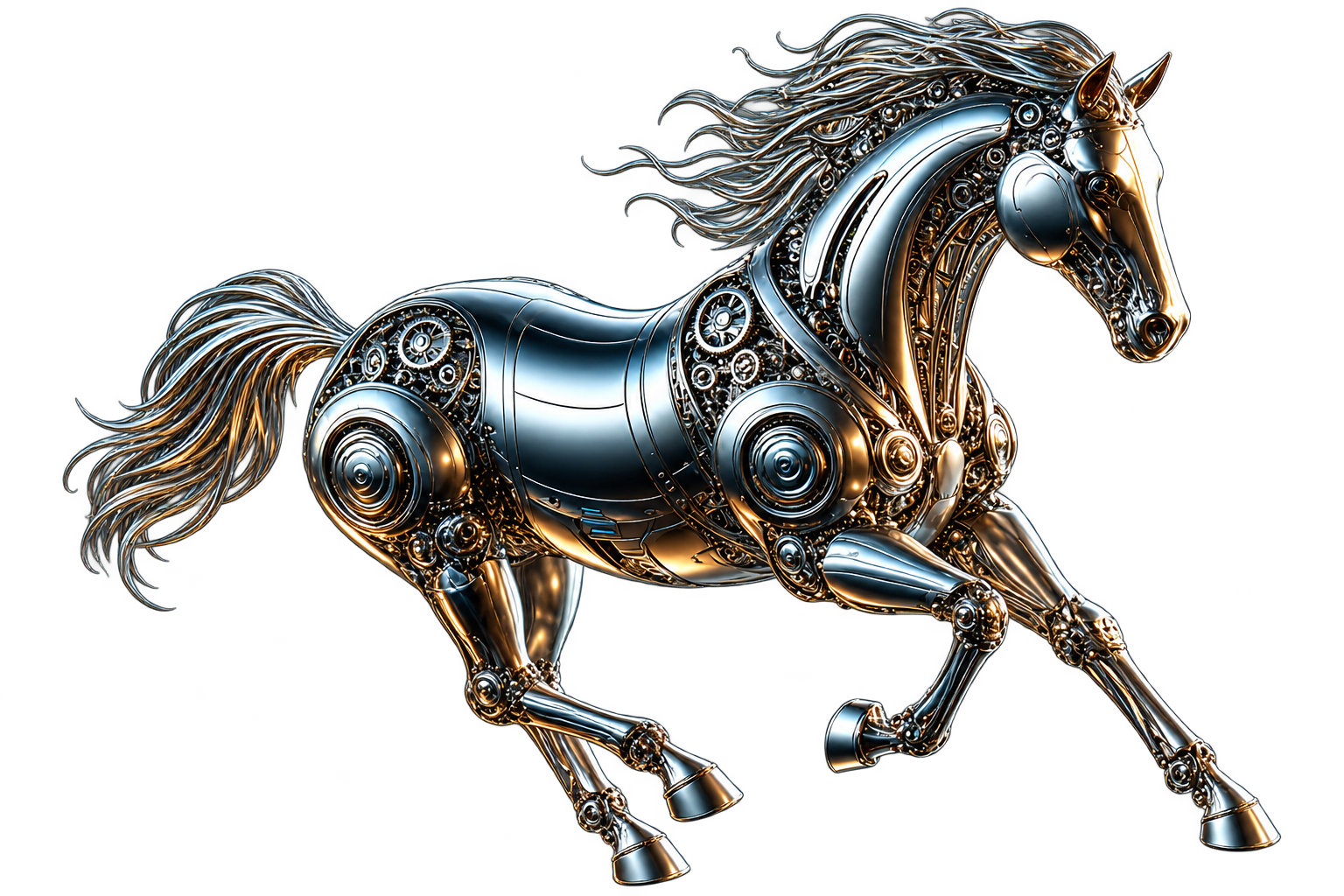
Organ Systems: Lung & Large IntestineAssociated Tissues & Systems: Skin, body hair & respirationSensory Organ: NoseSeason: AutumnEmotional Patterns: Clarity, grief & letting goTaste: Pungent/Spicy
The Metal Horse teaches us about the trust that grows through showing up for one another. They are often thoughtful, capable, and quietly determined and find connection through work. They may not seek attention or offer affection freely but there is depth beneath the surface. A quiet moment can mean as much to them as a playful exchange means to a Fire horse.
Like autumn, when the trees release their leaves and the world begins turning inward, Metal horses encourage us to reflect on what matters and what we are ready to let go of. These horses ask us to respect boundaries, become clear in our intentions, and recognize that love does not always need a big expression. Sometimes it is found in familiar routines, mutual respect, and the willingness to keep learning together.
Sharing your life with a Metal Horse may also ask you to look beneath a composed exterior. Their willingness to continue can make it easy to overlook when they need a rest or a change. Learning to hear their quieter responses is part of honoring the trust they place in us.
Physical & Emotional Patterns
Metal is associated with the Lung and Large Intestine systems, dryness, the skin and coat, and the emotion of grief. The Lung helps move Qi and supports the body’s protective energy while Large Intestine receives waste and releases what is no longer needed. Breath, elimination, boundaries, and letting go are all part of the Metal picture.
They tend to be quiet, reserved, and independent, sometimes appearing aloof. They may be selective about affection and companionship but the connections they form can be deep and lasting. When balanced, they are observant, dependable, and steady in their responses. They appreciate order, clear communication, and time to themselves without losing their connection to those they trust.
When out of balance, they may become more rigid, impatient, or easily irritated, particularly when their surroundings are noisy or their handler’s requests are inconsistent. Some may withdraw from interaction or become less receptive to touch. A horse who appears calm may still be carrying tension or continuing to work while struggling to cope. Recurring coughs, respiratory concerns like heaves, skin sensitivity, dry stools, and changes in the coat may show signs of imbalance. We may also notice tension or stiffness around the shoulders and forelimbs
Grief can be an important part of the Metal picture. The loss of a companion, a change in a close relationship, or a move to a new home may be felt deeply. Some horses become quieter and less willing to engage, while others may seem more anxious, irritable, or reactive. Notice changes in appetite, interaction, and how they spend their time. Giving these horses space does not mean leaving them without companionship or support.
Nutrition & Herbs
To support the Metal horse, I pay close attention to dryness and to supporting the Lung and Large Intestine systems.
Moistening foods and herbs that support the GI like Chia, marshmallow root, and slippery elm.
Respiratory herbs like Mullein and plantain can be beneficial especially if there is a cough or air quality is bad.
Seed based fats like chia or flax provide omega-3’s to help support a healthy inflammatory response and skin and coat health
Supplementing additional vitamin E if they aren’t on pasture helps support normal immune, nervous system, and muscle function.
Training, Lifestyle & Balance
Metal horses often enjoy learning new skills, structured lessons, mental challenges, and meaningful work. They appreciate a calm, steady presence and clear requests. Older or retired Metal horses often enjoy a familiar task, a quiet walk, or simple in-hand work that keeps them mentally stimulated and involved at a level that feels comfortable for them.
They may be less receptive to long grooming sessions or a lot of touch. They tend to prefer gentle bodywork techniques with light touch like acupressure, craniosacral, or energetic work.
They tend to do better in quieter homes or small boarding barns, with a small, compatible herd that offers companionship while allowing them space and independence when they need it. If they live in a busy barn, a stall away from the main activity and access to turnout can give them room to step away when needed. Constant music, noise, and frequent changes may make it harder for them to settle. Be mindful of the air they breathe, as dusty hay, bedding, arena footing, poor ventilation, and irritating sprays can aggravate sensitive airways.
Building trust with a Metal Horse takes time, consistency, and respect for their boundaries. They can be more reserved and independent but that doesn’t mean the connection isn’t there. Their affection may show up in quieter ways like choosing to stand beside you or staying engaged in the meaningful work/play you do together. Notice those small moments and let affection develop at their pace. Even a horse who keeps showing up for us needs us to do the same for them.
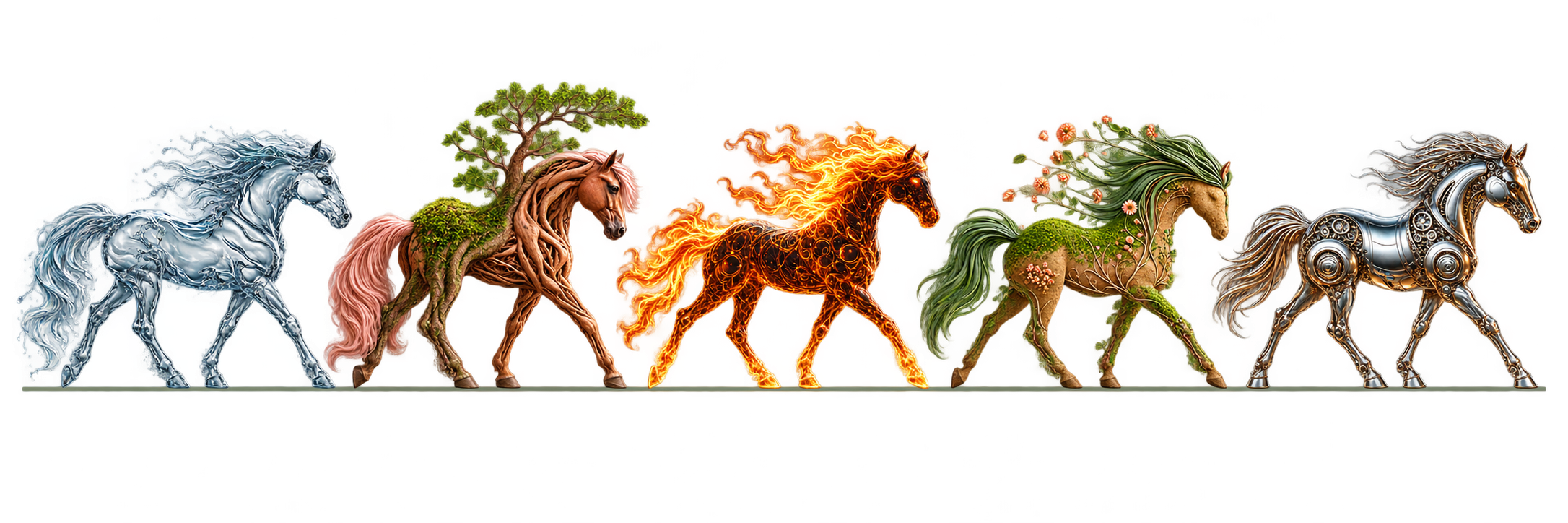
The Five Elements help us connect the physical, emotional, and behavioral patterns we notice in our horses. Things that once seemed unrelated may begin to make more sense, helping us understand what unsettles them, where they need support, and the environments, relationships, and activities they enjoy.
For me, this is where elemental theory becomes useful in everyday care. Understanding these patterns helps us make changes in feeding, movement, training, companionship, and environment that fit our horse. We keep watching how they respond and adjusting as their needs change.
If you’d like to explore your horse’s element and how to support them through bodywork, nutrition, and lifestyle, schedule a session. Sessions are available in person and remotely.
Nutritional suggestions are broad examples, not a list of supplements every horse needs. Each horse’s diet, health history, and current needs will guide what’s appropriate. If you’d like help sorting through what might support your horse, individual nutrition consultations are available.
