
When our horses have an injury or are experiencing pain, we naturally want to bring our attention directly to the source. However, often the area is too sensitive for touch so we need to adapt our approach and begin with the surrounding tissues where the horse can comfortably accept our touch.
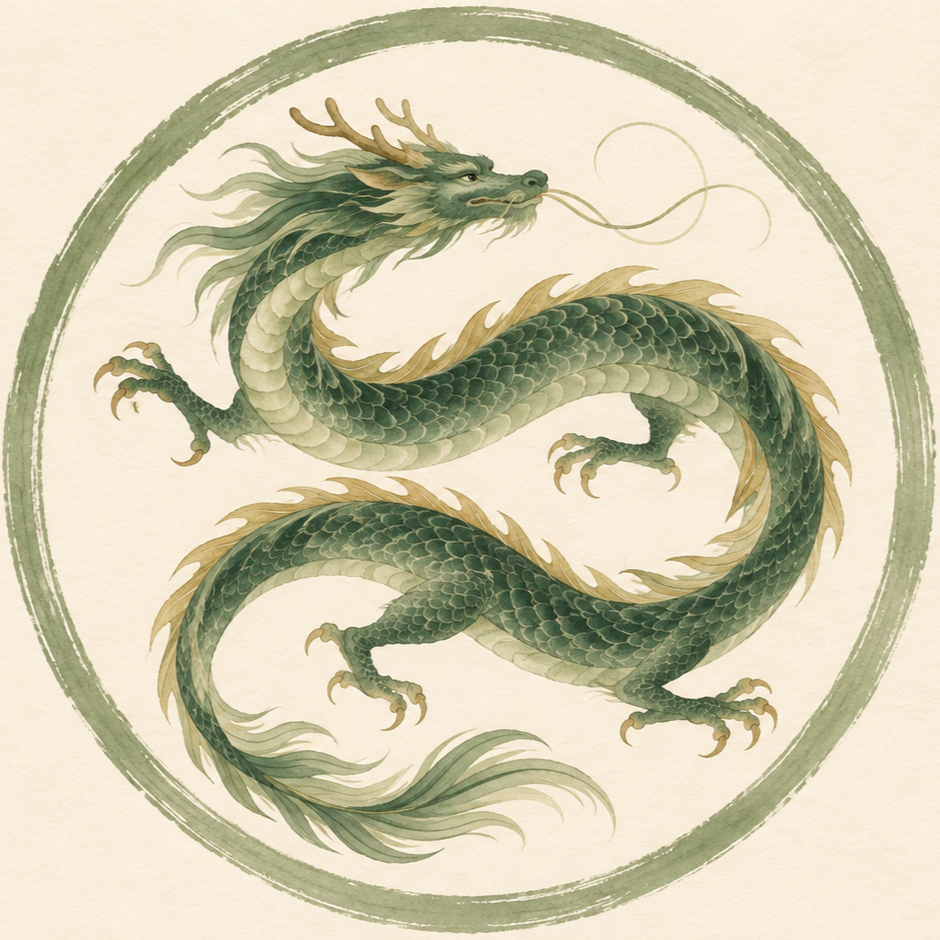
In Chinese medicine, there is a technique called “Surround the Dragon” that uses encircling points around an injured or painful area, the dragon. The dragon can be an area of muscle tension, arthritic joint, torn ligament or tendon, a wound or scar tissue. The technique encourage the movement of Qi, clear stagnation and support circulation while gently working with the surrounding muscles and fascia to help ease tension and guarding and reduce pain.
We can select traditional acupressure points, ‘Ah Shi’ points, or a combination of both that circle the area, using the pad of our thumb, a tuning fork, or even a soft, flat hand to offer gentle contact.
Selecting Points:
Traditional Points: Looking at an acupressure map, you can select multiple points that are a few inches away from the source creating a circle or oval around it. For example:
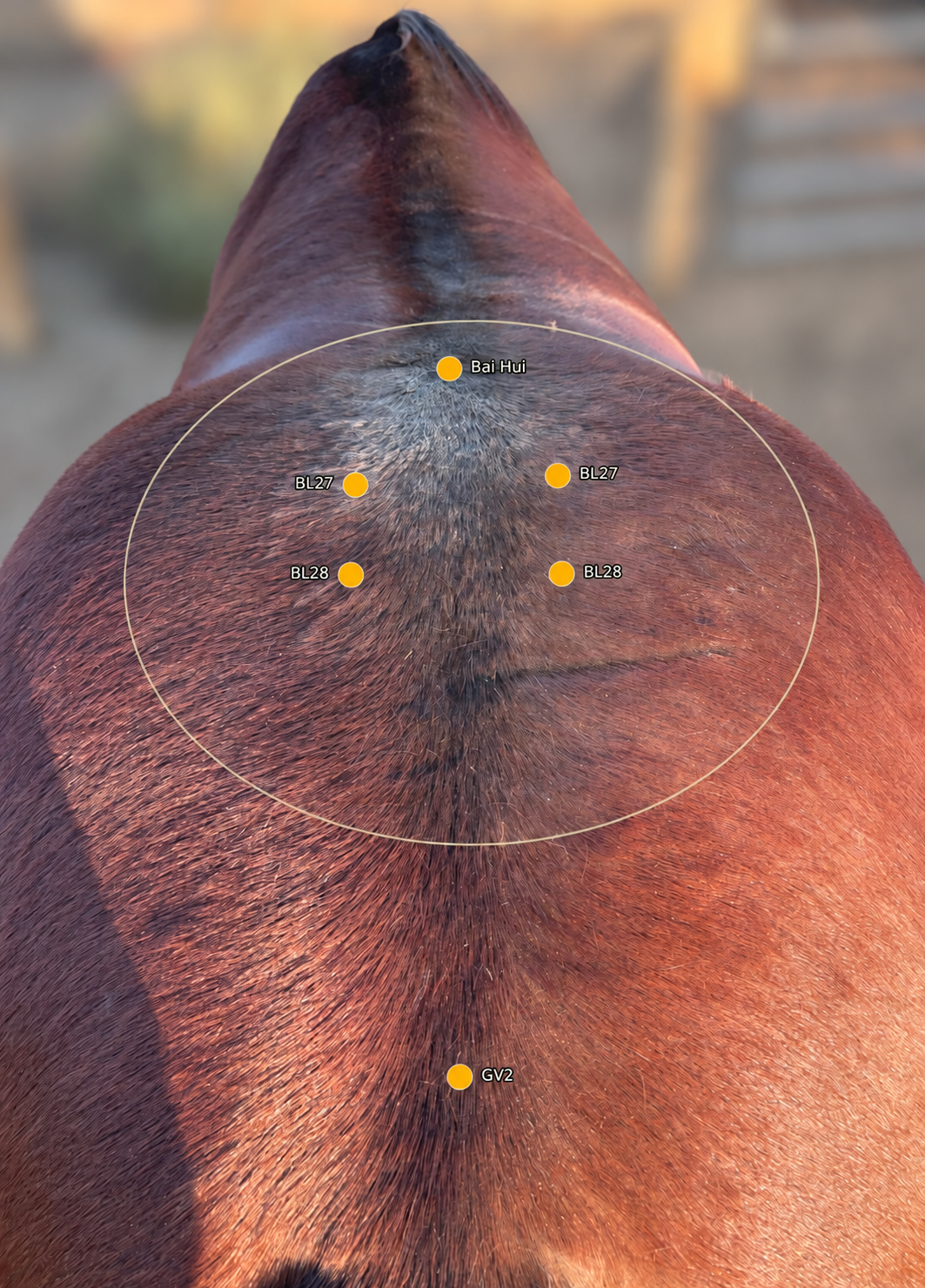
Supporting a horse with SI concerns: we can consider using Bai Hui, Bladder 27 (left/right), Bladder 28 (left and right) and Governing Vessel 2.
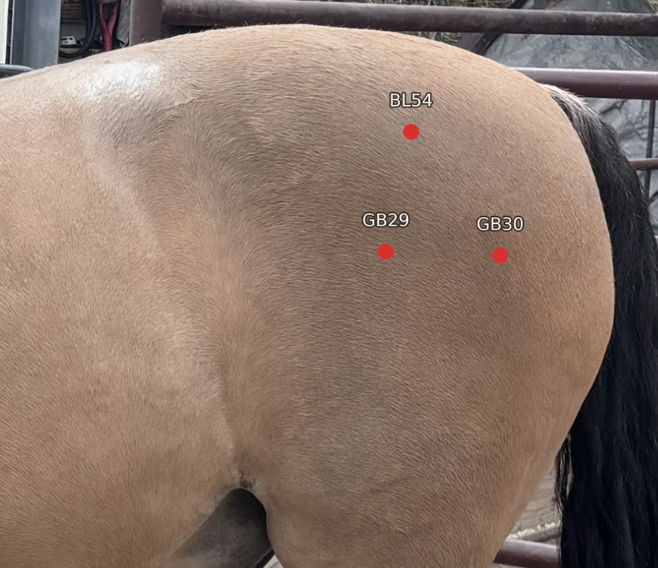
For hip issues we could consider GallBladder 30, Gallbladder 29, and Bladder 54.
Ah Shi points: translates to “that’s the spot”, I jokingly refer as “ah shit” points because they can be a little tender. That tenderness is useful information but it’s also a reason to soften our contact. We don’t need to make the horse hurt to do something helpful!
You would select multiple points several inches away from the affected area that would form a circle. For example: for SI concerns you can look at the circled area in the above image as areas to consider.
We are looking at subtle feedback to note ah shi points:
Sudden blink or eye tension
Ear pinning
Muzzle or Jaw tightening
Tail swishing
Tissue texture changes
Temperature changes
Muscle guarding or fasciculation when you touch an area.
Supporting Points:
Points can be stimulated using your thumb or a tuning fork (my personal preference is 128 Hz fork) coming slightly into the tissue. Using the broad pad of your thumb to offer light steady contact, similar to checking the ripeness of a peach. Keep your hand relaxed so energy can flow and allow your horse’s response to guide the pressure and duration, but typically 30-90 seconds.
For a weighted tuning fork, you will strike the tuning fork and then place the stem directly on the acupressure point or ah shi point.
As with anything, listen to the horse. We want to see the horse settle, soften, close theirs eyes and relax into the work. If they are bracing, moving away, pinning the ears, or hollowing the back we should adjust our approach, point selection, or pressure we are using.
